
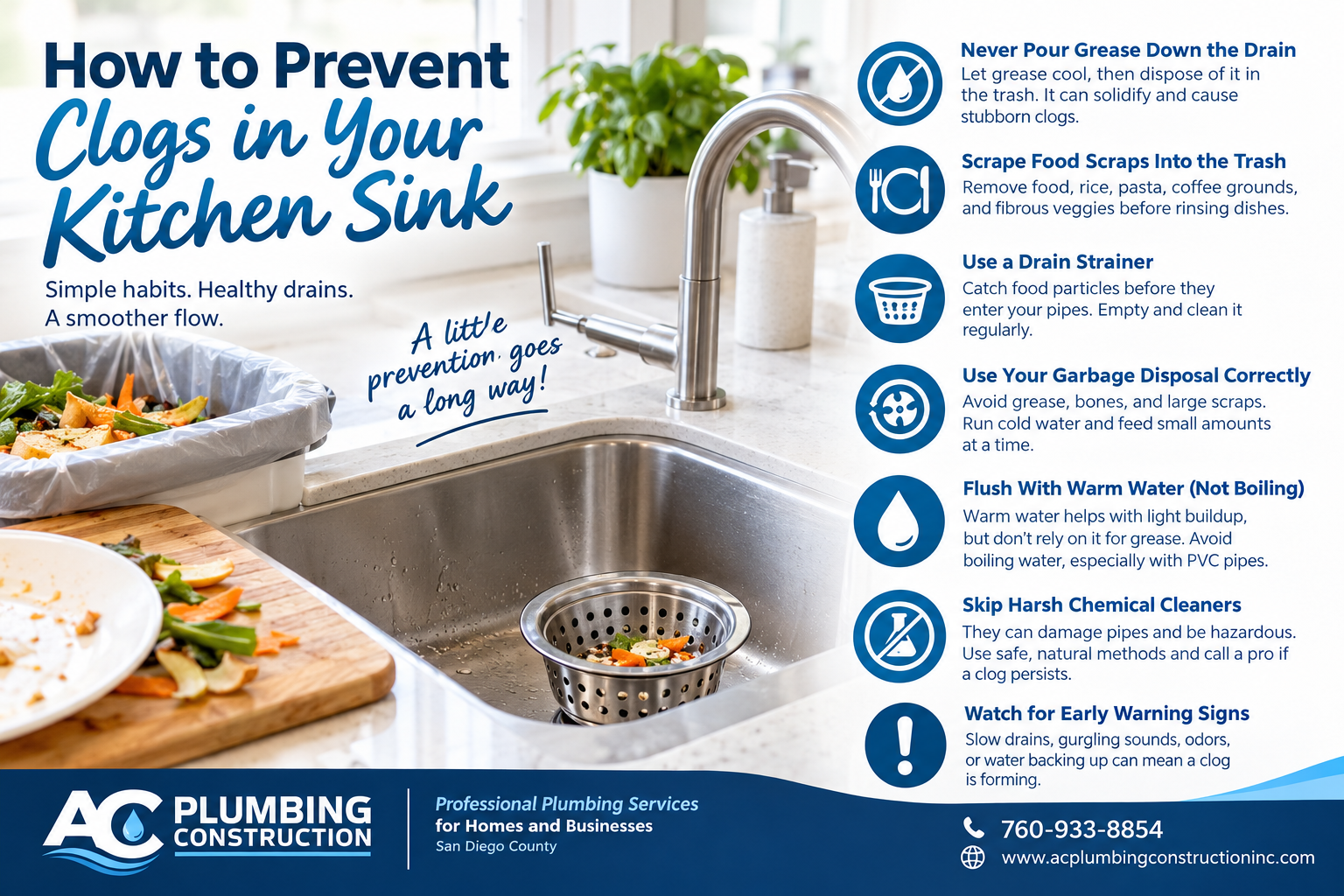
There are several easy-to-follow tips to help avoid potential plumbing issues and reduce the chance of having to call for costly plumbing repair.
Changing a few daily habits will go far to help ensure that your water flows freely through your kitchen sink and minimize the opportunity for clogs to develop.
We have seven helpful tips below.
1. Don’t Pour Grease Down The Drain
Grease is typically considered the most common cause of clogs within a kitchen drain. While liquid grease may appear to be able to flow through the drain, once it has cooled it will begin to thicken. Once this happens it can start sticking to the walls of the pipe, which over time will build-up along with other debris and food particles.
Instead of pouring grease down your drain, allow it to cool, then discard it in accordance with your local disposal regulations. When wiping greasy pans, do so using a paper towel prior to washing. Do not dispose of bacon grease, butter, lard, or leftover frying oil via your kitchen drain.
2. Dispose Of Food Waste In The Trash
While it’s understandable that we occasionally overlook food scraps and inadvertently send them down the drain, even tiny pieces of food can lead to clogging your kitchen sink. Rice, pasta, coffee grounds, eggshells, and fibrous vegetables all have the ability to get stuck in your drainpipes or combine with grease to create clogs.
Scrap off excess food from each plate before washing. Be extra careful when disposing of fibrous foods like celery, corn husks, and onion skins. These types of foods can become caught in your pipes or jam the parts of your garbage disposal.
Washing dishes by hand is an excellent example of how using a drain strainer can help keep food scraps out of your plumbing system.
3. Utilize A Kitchen Sink Drain Strainer
Using a kitchen sink drain strainer is another simple way to capture food scraps before they make their way into your plumbing system.
When choosing a drain strainer, select a model that is both removable and securely fastens onto your sink drain. Empty your strainer frequently and thoroughly rinse the captured food debris to eliminate any unpleasant odors.
It is essential to note that while a strainer can effectively filter out food debris, liquid fat (such as grease) can still make its way past the strainer and eventually build up further downstream in your plumbing system.
4. Utilizing Your Garbage Disposal Effectively
Garbage disposals can successfully break-down smaller amounts of acceptable food waste; however, they were never intended to break-down every type of kitchen waste.
Do not put grease, cooking oil, large bones, large amounts of fibrous veggies, or large quantities of starch-based foods into your garbage disposal. All of these items can produce clogs, damage the various mechanical components of your disposal unit or negatively affect the performance of your sink’s drain.
Follow the manufacturer’s instructions regarding running cold water while utilizing the garbage disposal. Gradually feed small portions of appropriate food debris into the disposal instead of trying to force large amounts into the disposal at one time.
Do not continue using your garbage disposal if it consistently fails to grind food debris (it simply hums), keeps tripping its reset switch, or is causing backups due to poor drainage.
5. Running Hot Water Through Your Drain After Washing Dishes
During and immediately after washing dishes, running warm water may aid in moving normal soap residue and small food particles through the drain. However, hot water is not effective against grease buildup. Hot water may only serve to carry melted grease further down the plumbing lines where it cools and solidifies.
Use extreme caution when pouring boiling water into your sink, especially if you have PVC piping, fragile seals or if you have a sink made of materials that could potentially be damaged by rapid temperature fluctuations.
The best prevention method for preventing grease and food debris from accumulating in your drainlines is to prevent it from going down there initially.
6. Using Caution When Using Harsh Chemical Drain Cleaners
Some chemical drain cleaners may offer a temporary solution for clearing a clogged drain; nevertheless, many chemical drain cleaners contain harsh chemicals capable of damaging some plumbing fixtures/components, producing hazardous splash-backs or exposing family members to toxic substances.
In no circumstance should you ever combine two separate chemical drain cleaners, especially those containing bleach or acid.
Clean your drain strainer and consult the manufacturers’ instructions for maintenance for both your sink and garbage disposal as needed. If you experience recurring clogs despite regular maintenance, contact a professional plumbing company who can accurately diagnose and treat the root cause of the clog without repeatedly applying harsh chemical treatments.
7. Identifying The Early Symptoms Of A Clogged Drain
Most kitchen sinks do not completely clog without some form of indication. Look for these common indicators:
Draining slower than usual.
Sounds gurgling from the drain.
Unpleasant odor that won’t dissipate.
Backed-up water in the sink.
Continued clogs despite cleaning/maintenance.
If several drains are draining slowly or wastewater is backed up into the sink, it indicates that the clog is further back in the plumbing system.
Identifying and addressing these indications early will also enable you to avoid turning a relatively minor restriction in your plumbing system into a larger plumbing-related expense.
Maintain A Clear And Functional Kitchen Sink Drain System
Following these habits will provide protection for your plumbing system and ultimately save you money from unnecessary costs associated with plumbing repairs: dispose of grease appropriately, dispose of food waste properly, utilize a kitchen sink drain strainer and maintain proper operation of your garbage disposal.
If your kitchen sink continues to drain poorly, continuously emits odors or continually clogs, it may be necessary to perform an inspection by a licensed professional plumber.
AC Plumbing Construction offers professional plumbing services in San Diego County. No matter what issues arise with your garbage disposal, kitchen drain clog or general plumbing needs, our knowledgeable staff will assist in identifying the issue and recommending possible solutions.